Is Awkwafina A Lesbian? Unpacking the Identity and Expression of a Multifaceted Star
Is Awkwafina A Lesbian? Unpacking the Identity and Expression of a Multifaceted Star
Is Awkwafina, the acclaimed actress, comedian, and musician, openly identified as a lesbian—a voice shouting from a platform that blends authenticity with artistry. Her self-identification, clear and unambiguous, has shaped public discourse around representation in entertainment, especially for queer Asian-American women. Far from a mere headline, her lifestyle and creative output reflect a nuanced, evolving identity rooted in truth, vulnerability, and cultural pride.
Understanding Awkwafina’s identity begins with recognizing the distinction between identity and expression. She has consistently affirmed her orientation as lesbian, not as a performance but as a core aspect of who she is. In the 2018 documentary *Awkwafina Is Names gone*, her candid reflections reveal a journey from personal discovery to public advocacy.
She describes coming to terms with her identity during her early 20s, a process she later framed as “figuring out” herself in a society still grappling with LGBTQ+ visibility. “I didn’t know I was lesbian until I was older,” she shared, emphasizing personal growth over a single moment of revelation. While male actors in the industry often face intense scrutiny about their identities, Awkwafina’s experience reflects broader shifts in cultural acceptance.
As a biracial woman navigating both Asian heritage and queer identity, her visibility challenges monolithic narratives about LGBTQ+ people. She rejects narrow stereotypes, embracing complexity: “I’m not just Asian or lesbian—I’m *both*,” she stated in an interview with *The New York Times*, underscoring that identity is layered and intersectional. The Evolution of Her Public Voice Awkwafina’s journey from underground stand-up to mainstream stardom—marked by breakout roles in *Crazy Rich Asians*, *The Farewell*, and *Shang-Chi and the Legend of the Ten Rings*—has been accompanied by a deliberate, thoughtful increase in cultural commentary.
In interviews, she rarely frames her work through an overtly political lens, yet her choices quietly amplify underrepresented stories. When cast in *The Farewell*, a film exploring cultural displacement through a queer Asian-American lens, she embraced a character whose quiet struggles mirrored real tensions within diasporic communities. Her decisions reflect intentionality: “I play characters who feel real, not just because they have a disability or are from a specific background, but because they carry layered humanity,” Awkwafina explained in a *Vogue* profile.
“Even when I’m not explicitly discussing queerness, the way I portray emotional honesty aligns with experiences many queer people share—finding safety, facing rejection, searching for acceptance.” Despite her rising fame, Awkwafina maintains a grounded perspective. “Commercial success doesn’t define me,” she noted in a 2022 podcast appearance. “What matters is whether I’m true to myself and respectful of others.” Her authenticity resonates across generations, particularly among young LGBTQ+ fans and BIPOC communities who see her not just as a star, but as a mirror held up to their own truths.
Identity in the Age of Representation Awkwafina’s identity as a lesbian intersects powerfully with her artistic process. Her music—sarpaced rap and soulful storytelling—often centers themes of self-acceptance, resilience, and connection. Songs like “Miracle” and “Poot” subtly weave personal narratives of empowerment, challenging assumptions about who queer women express themselves.
In interviews, she explicitly rejects singling out any identity for performative politics, stating, “I’m not here to be the “lesbian actress” or the “asian actress”—I’m here to be Awkwafina.” Her influence extends beyond entertainment. As one of the few openly queer Asian-American leads in Hollywood, she reshapes industry expectations. Producers and writers now more frequently seek actors who embody lived experience rather than relying on stereotypes.
“She shows that voice matters—just as much as face and name,” remarked showrunner Daniel Bienia on *Entertainment Weekly*. “When a talent speaks from experience, it creates space for more honest storytelling.” Awkwafina’s impact also permeates social discourse. Her presence normalizes queerness in contexts where Asian communities historically emphasize conformity.
Surveys by LGBTQ+ advocacy groups show growing visibility in media correlates with increased self-affirmation among queer youth of color; Awkwafina’s work is cited as a key factor in this positive shift. Challenges and Misconceptions Despite widespread support, Awkwafina’s identity is not without mythmaking. Some reduce her to headlines, conflating visibility with caricature.
Critics occasionally misunderstand nuance—assuming openness equates to constant activism, or that being Asian means embracing heteronormativity. Awkwafina counters this by emphasizing individuality: “Not every Asian has a LGBTQ+ story, and not every queer person is Asian. I’m one voice in a chorus.” Misrepresentation remains a risk.
Media narratives sometimes homogenize queer experiences, flattening the vast spectrum of identities. Awkwafina pushes back gently: “I’m not speaking for every queer person, but I hope my truth helps others feel less alone.” Her measured honesty invites dialogue rather than dogma, creating room for diverse voices within and beyond the LGBTQ+ umbrella. The Broader Implications Awkwafina’s stance—quiet, steady, rooted in lived truth—spells a larger lesson: representation matters not because of who it centers, but because it makes space.
Her journey from a stand-up comedian in New York to a global cultural icon illustrates how authenticity can transcend borders, language, and expectation. By living openly as a lesbian while celebrating her heritage, she challenges the closet culture still clinging to parts of the industry and society. Her story is not theirs to own.
As Awkwafina herself might say: identity is personal. Yet shared visibility carves pathways—small though they may seem. Each time she speaks her truth, she reinforces the idea that everyone deserves to see themselves reflected, fully and fairly.
In Awkwafina, the world sees not a token, but a trailblazer—an artist whose courage in embracing her lesbian identity enriches storytelling, broadens empathy, and reminds us that authenticity is the most powerful performance of all.

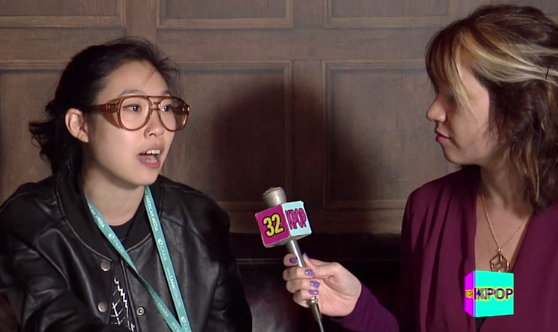
![[PICS] Awkwafina: Photos Of The ‘Ocean’s 8’ Breakout Star – Hollywood Life](http://hollywoodlife.com/wp-content/uploads/2017/03/awkwafina-6-1.jpg?w=480)
Related Post
Winona Ryder's Ageless Charm: Unpacking Her Iconic Role in Bram Stoker's Dracula</h3><p>In 1992, Winona Ryder reprised her breakout role as Mina Harker in Francis Ford Coppola's adaptation of Bram Stoker's Dracula, cementing her status as a Hollywood leading lady. In this article, we'll delve into the making of this iconic film, exploring the intricacies of Ryder's portrayal of Mina and the ways in which it showcases her ageless talent.</p><p>Winona Ryder's casting as Mina Harker in Bram Stoker's Dracula was a pivotal moment in the film's production. Ryder, who was in her mid-twenties at the time, brought a youthful energy to the role, which offset the more mature performances of the film's other lead actors, including Gary Oldman and Anthony Hopkins. As Ryder herself notes, "I was so young, and I was playing a character who was kind of an innocent, and I think that's what made her so compelling."</p><p>Coppola, who has long been a supporter of Ryder's work, saw in her a unique talent that would bring depth and nuance to the character of Mina. "Winona had a sense of vulnerability and fragility that was perfect for the role," Coppola recalled in an interview. "She was able to convey the character's emotions in a way that was both subtle and powerful."</p><p>One of the key aspects of Ryder's performance in Bram Stoker's Dracula is her ability to convey the complexities of Mina's character. On the surface, Mina appears to be a traditional Victorian-era wife, devoted to her husband and lacking in assertiveness. However, as the film progresses, it becomes clear that Mina is a strong-willed and independent individual, capable of withstanding the pressures of the supernatural forces that surround her.</p><p>Ryder's portrayal of Mina is characterized by a mix of fragility and determination. Her character's emotional vulnerability is palpable, particularly in the film's iconic scenes, such as the scene in which Mina is trapped in the snake scene with the vampire. At the same time, Mina shows remarkable resilience and strength in the face of adversity, refusing to give in to the forces of darkness that seek to consume her.</p><p>Bulleted points of critical acclaim:</p><p>• Ryder received wide praise for her performance, with many critics noting her ability to bring depth and nuance to the character of Mina.</p><p>• The film's use of sensual imagery and visual metaphors added to Ryder's performance, creating a dreamlike quality that drew audiences into Mina's world.</p><p>• Coppola's direction of the film was widely praised, with many critics noting his ability to create a sense of tension and foreboding that was both suspenseful and atmospheric.</p><h2>Behind the Scenes of Bram Stoker's Dracula</h3><p>The making of Bram Stoker's Dracula was a complex and often challenging process. Coppola, who had previously helmed films such as The Godfather and Apocalypse Now, was determined to create a film that would be both faithful to the original novel and innovative in its approach. As he notes, "I wanted to create a film that would be a metaphor for the vampire's victims – people who are trapped in their own lives, struggling to find freedom and release."</p><p>Coppola's vision for the film was shaped by his own experiences growing up in a family of artists. "I grew up surrounded by art and music, and I think that's where my love of storytelling comes from," Coppola explained. "I wanted to create a film that would be a hybrid of art and film, something that would be both beautiful and terrifying."</p><p>The film's production was marked by intense collaboration between Coppola and his cast and crew. As Ryder recalls, "Francis is an incredibly talented and intense director, and he demands a lot from his actors. But at the same time, he's also incredibly generous and supportive – he wants to bring out the best in everyone."</p><h3>Impact and Legacy of Bram Stoker's Dracula</3><p>Bram Stoker's Dracula was released in 1992 to widespread critical acclaim. The film grossed over $215 million at the box office and won several awards, including an Academy Award for Best Costume Design.</p><p>However, the film's impact went far beyond its commercial success. As a film, Bram Stoker's Dracula redefined the boundaries of cinematic horror, pushing the genre in new and innovative ways. As a performance, Ryder's portrayal of Mina Harker set a new standard for actresses in the genre, demonstrating a depth and nuance that was both captivating and inspiring.</p><p>Today, Bram Stoker's Dracula remains a cult classic, widely regarded as one of the greatest horror films of all time. As Ryder notes, "I feel incredibly fortunate to have been a part of something that has had such a lasting impact on audiences and the film industry as a whole."</p><p>The lasting impact of Bram Stoker's Dracula can be seen in the many filmmakers and actors who have been influenced by Coppola's vision and Ryder's performance. As one film critic noted, "Bram Stoker's Dracula is a film that has stood the test of time – its themes of love, death, and the supernatural continue to captivate audiences to this day."</p><h1>Conclusion: Winona Ryder's Ageless Charm in Bram Stoker's Dracula

Isabel Sanford Married to a Quiet Life After Legal Turbulence: Her Real-Life Spouse Revealed

Unlocking The Mystery Of Amazon Bank Discount: How Processing Fees Shape Every Click of Your Transaction


